Top 10 Challenges of Building a Home on a Difficult Lot

Building a custom home on a difficult lot brings elevated complexity but can deliver stunning aesthetic rewards – such as panoramic views, natural lighting, or unique architecture. With Miller Marriott’s extensive expertise – from our skilled architects to careful site planning and seasoned construction managers – these challenges can become opportunities for innovative design and quality construction.

1. Complex Foundation Engineering

Homes built on steep or uneven lots often need custom foundation systems such as retaining walls, pilings, or deep footings to ensure stability. These solutions tend to raise both the cost and construction time, particularly on slopes with gradients over 20%.
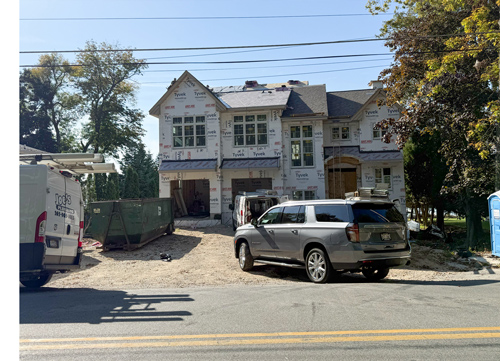
Lot accessibility photo2. Limited Accessibility

Steep or irregularly shaped lots often do not have direct access for vehicles and construction equipment. Narrow, steep, or short driveways and staging restrictions can slow down construction and raise material transport costs.

3. Design and Aesthetic Limitations

Fitting a standard home design onto a challenging lot is often impossible. Custom architectural plans — considering slope, sunlight, or street alignment — are necessary to balance function and visual appeal.

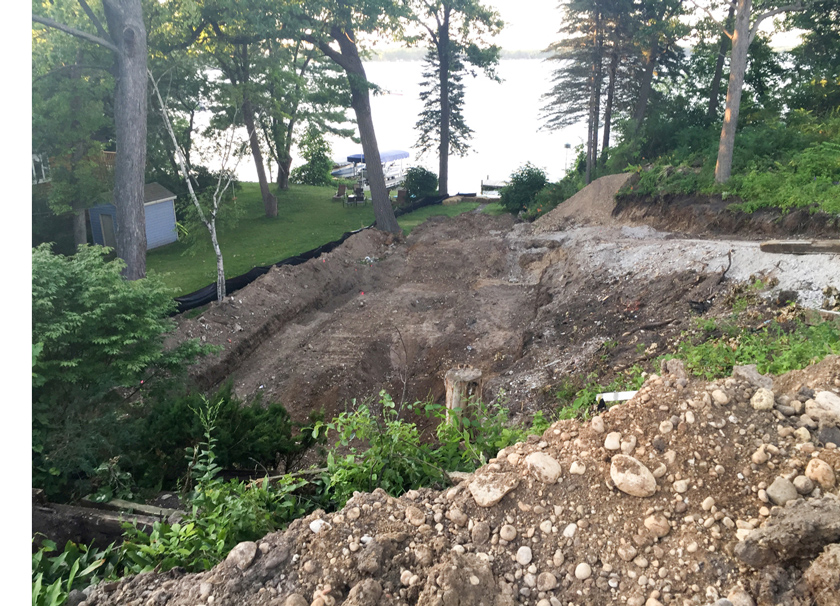
Site excavation photo4. Excavation and Access Issues

Getting heavy machinery onto a steep or narrow lot can be extremely difficult. Many projects need special excavation equipment which adds to logistical difficulties and costs.

5. Soil Type and Stability

The soil type affects both the safety and expense of the project. Wet clay can expand and lead to foundation cracks, whereas rocky soil might necessitate expensive blasting. Conducting a geotechnical survey is essential before starting any design work.

6. Drainage and Water Runoff and Erosion Control

Effective water management is essential to prevent damage to foundations or erosion. Engineers need to design grading, drainage systems, and waterproof retaining walls that direct rainwater away from the house and nearby properties.

Sloped sites are vulnerable to erosion, particularly during construction. Builders need to implement terracing, planting vegetation, and installing retaining structures to stabilize the soil and safeguard the new home from future runoff damage.

7. Zoning and Setback Restrictions

Irregularly shaped or small lots may be subject to strict zoning, setback, or easement regulations, which can limit building placement. Complying with local ordinances can reduce the usable footprint and complicate design.

8. Septic and Utility Challenges

Homes built far from municipal lines or at extreme elevations might need custom sewage and water solutions. For instance, upslope sites require pumping systems, while downslope locations may need special flow control designs.

9. Increased Costs

The cumulative impact of specialized engineering, design, and site preparation results in building on a challenging lot costing 20–50% more than on flat sites

10. Timelines

Building a home with these challenges adds complexity to construction, resulting in prolonged timelines compared to building on flat, straightforward lots.
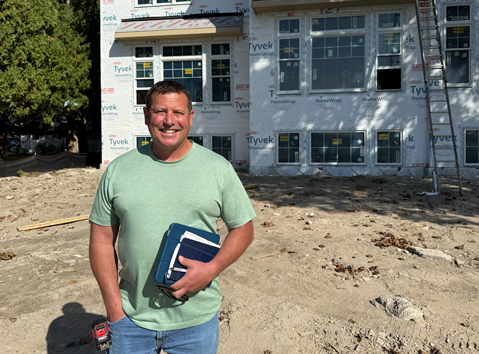
Dave Draeger photo

Senior Construction Manager Dave Draeger has the experience and problem-solving skills to take on these challenging lots and produce outstanding homes built to last a lifetime.
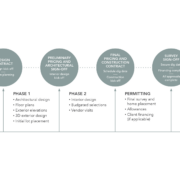
 

What is Design/Build?

You have decided to build a home. Now what?

When looking for a partner in the home-building process, determining how you want to make your vision a reality is the first step. Do you need a home designed? Do you already have a home designed and need someone to build it? Or do you need someone to do both the design and the build? There is no right or wrong approach; it’s just a matter of figuring out which one will work best for your needs.

Falling into the third aforementioned category, Miller Marriott is a design|build firm. We are a collaborative team that carries out our clients’ visions through both the design and construction phases of a project.

Why choose a design/build company like Miller Marriott? Traditionally, clients would work with a designer or an architect before taking the plan to a builder to execute the vision. This method is called design, bid, and build, or DBB. In this approach, the designer or architect is hired separately from the general contractor. In the design|build method, those specialties exist under one roof. Design|build provides a homeowner with a general contractor and an architect and/or interior designer.

Some benefits of the design|build approach include:

  • Design|build firms operate as a “one-stop shop” for home construction. The whole design/build team shares the homeowners’ vision throughout the entire process. If a change needs to be made, there is no need to discuss it with the designer or architect and then also communicate it to the builder.
  • Due to the overlap between the design phase and the construction phase, the home building process is shorter overall. The overlap also eliminates a lull in momentum that tends to occur when the design phase ends and a general contractor then takes up the build phase.
  • There is no risk of finger-pointing between the design and construction teams. Instead, there is one cohesive, responsible team that has experience positively collaborating.
  • With a design|build firm, the architect and builder are both abreast of the project and working together. So, when there are changes in the project, the “back and forth” between an independent architect or designer and the general contractor can be eliminated, which helps keep the project on track.

 If you choose to move forward with the design|build option, it is important to ensure any design|build firm that you are considering can produce quality designs. Some companies call themselves design|build, but they don’t really possess the design portion; instead, it is subcontracted out.

When starting your project, the best approach is to interview as many people as it takes to find someone with whom you feel comfortable working. No matter which scenario fits your needs—a design|build firm, or handpicking a designer and a general contractor—the process of building a home should be just as enjoyable as the completed project. Contact us today if you have questions.

Price and Timeline Clarity

When at a nationwide builder’s conference, it became painfully clear that across the country, the industry’s top client complaints were due to feeling a lack of clarity on costs and timing while building their homes. This lack of clarity is the impetus for the all-too-common statement, “I love the home we built, but the process was a nightmare.” And frankly, if it is a nightmare process for a client, it likely isn’t fun for the builder either.

We left the conference with the goal of clients who love the building process as much as the home itself, which meant they would need clarity on timing and cost.  In an industry that has long project timelines, and is subject to labor shortages, changes in material prices, client revisions and mother nature, we knew it would require a consistent approach and lots of transparency.

To enjoy the home building process, you need to be on a design|build path that is right for you. You should be provided with guidance and the details needed to choose the best approach, since different approaches to building will necessitate distinct timing and cost expectations. At Miller Marriott, we help guide our clients by offering upfront insights and options based on their timeline and budget, but also based on design objectives and project scope, so they can choose the design|build path that best meets their needs. Here are some examples of these unique paths:

  • A full-custom home, with each detail meticulously selected from vendors and specialty suppliers, is one of the more costly approaches and takes more time to design and potentially build.
  • A semi-custom home, based on a builder’s various plans and the client’s inspiration, with a hybrid approach to making finish design decisions, is usually less costly than a full-custom home and has a slightly faster timeline.
  • A home modeled after a base plan with curated finishes—choices that are presented to you based on your style—is not only a more timely process, it also makes it easier for clients to stick to their budget.

Note: Decision making and changes after construction starts can always slow down the process. This also applies to delayed municipality and HOA approvals.

Here are some areas to consider when planning for transparent costs:

  1.  Project budget
    The team at Miller Marriott works to understand our clients’ budgets upfront.  This might mean breaking down an “all in” budget to better understand home and site costs, or trying to estimate site conditions on a unique piece of land.   Once the budget is clear, and we and the clients are both on the same page, we work with respect to that budget while planning and designing the home portion. We also use cost allowances that are dictated by agreed-upon standards. Choices in architecture and finishes can be easily tied to the overall price and are visible to the client at all times.We help to prioritize, select, and customize decisions regarding your home, and we offer a variety of options to accommodate clients’ differing budgets. With our knowledge of current industry costs for materials and labor, and with our intel on site fees like permitting and municipality costs, we can give you all the details and guidance you need to feel confident in your established budget.
  2. Home pricing
    Before a project starts, a home’s price is an estimate based on a price per square foot. We utilize our build and quality standards in this factoring, and share those with clients so they know what the number represents. During the design process, the architect will work to the budget. Then based on the chosen level of customization, the client will get actual pricing prior to finish selection, and again for a final cost review before construction. Miller Marriott uses as much visualization—through technology, existing homes, and vendors—as possible to avoid making changes during the build process. (While modifications can be made, they can be expensive and cause delays.)
  3. Site work/conditions
    Site work is usually not well understood. It is expensive and is the only price that builders cannot fully guarantee because it involves the land and what is below the surface. We attempt to get conservatively close with our estimates, but, for example, you may not know exactly how deep a well goes, or if there are unexpected qualities of the soil. In our upfront estimate, we include all aspects of the physical land preparation, as well as permitting and approval costs and municipality fees.

 In addition to budget, we also want to learn from our clients when they want to be living in their new home. Using the provided date, we then work backwards by considering the selected design approach, the approval/lending cycle, and construction estimates, based on the size and location of the project. From there, we can give our clients a rough timeline for design decisions. And because we don’t want a client to feel pressured during design, we keep the tentative dig date visible, and if we need to adjust it based on the design timeline, we make that decision together with the client.

Once a client’s design is complete and approved, we lock in the dig date. After we begin construction, we follow a well-planned step-by-step schedule to meet the projected move-in date. The schedule builds in time for some degree of natural delays, such as weather or a sick subcontractor. If there was ever an unforeseen significant delay, we would immediately communicate that to our client, including the reason why and the new target date. Such a situation might arise with a natural disaster or pandemic. Or, as mentioned, client changes during the build process can also delay a job, and the revised timeline would be discussed upfront when the client is making their decision on the proposed adjustment.

At Miller Marriott, we provide our clients a unified flow and a team approach from initial concept through completion of construction. We believe that setting upfront timeframes and budgets, while keeping costs and deliverables transparent and visible throughout the process, is respectful management of our clients’ individual needs. By thoughtfully collaborating with you and offering solution-based support, we can make certain your costs and timeline stay consistent, without unwelcome surprises. If this sounds like a process that you’d enjoy, reach out to us today.